
Step into Guangzhou’s wholesale markets, and a savvy buyer needs just one day to traverse three completely different worlds. From T-shirts costing a few cents to original designs worth hundreds of dollars, the pulse of the market beats clearly here.
As the heartbeat of China’s apparel industry, Guangzhou’s wholesale network is vast and precise. For SME buyers from the US and Europe—especially Boutique Owners—understanding the core layout is the first step to successful sourcing.
The map centers on three districts with distinct styles and positionings: Shahe, Shisanhang, and the Railway Station (Baima). Each corresponds to a different need in the supply chain.
Table of Contents
01 Shahe market:The Market Layout
Shahe District is one of the largest clothing wholesale markets in Guangzhou by volume, located around Lianquan Road in Tianhe District. The pace here is incredibly fast, focusing on Online Wholesale and Live Streaming Supply.
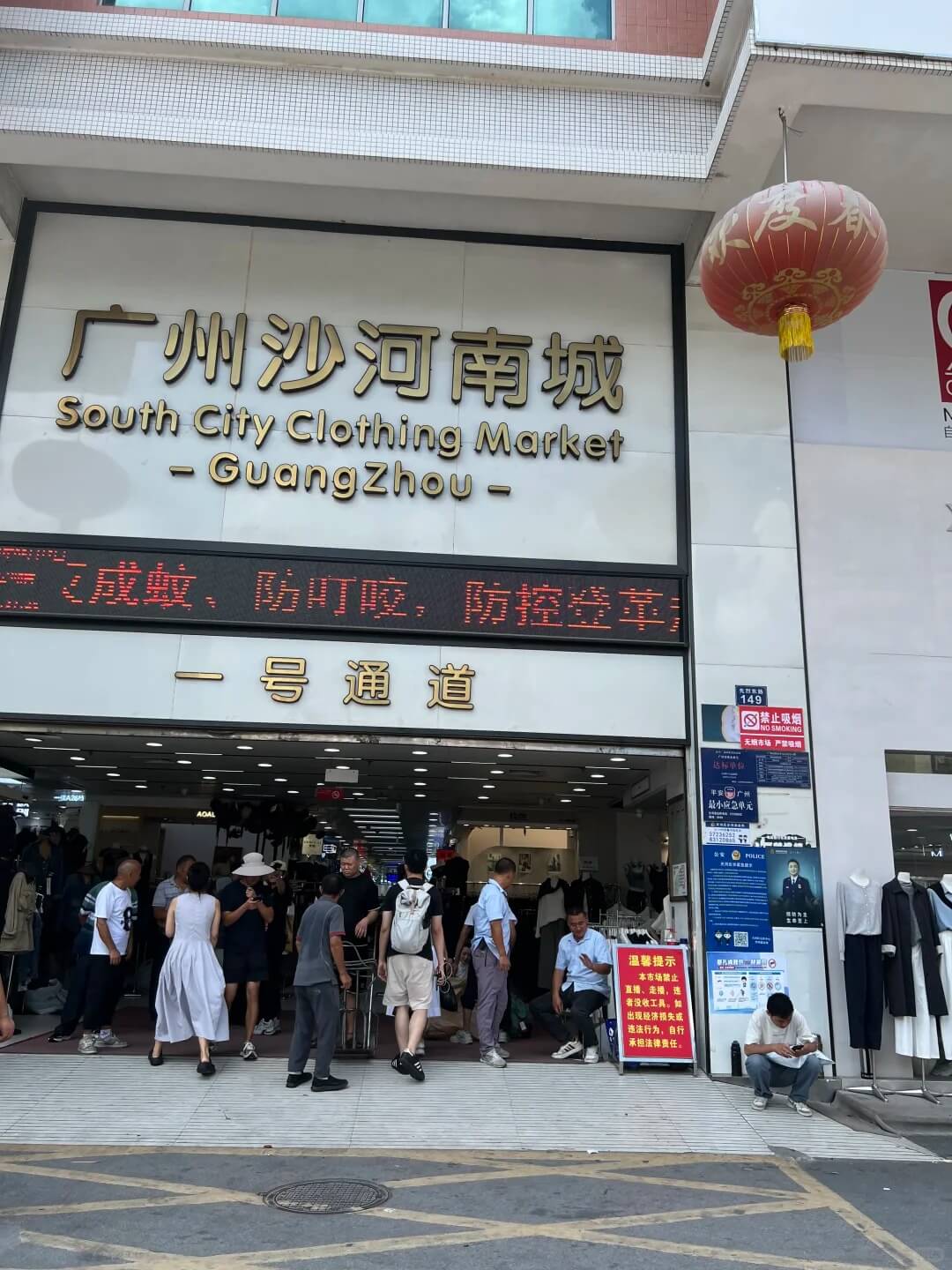
The market opens at 5:00 or 6:00 AM, and by noon, major stalls have already closed. This model suits buyers who chase extreme efficiency and can make quick decisions.
Prices here are highly competitive. Many basic T-shirts, jeans, and hoodies are priced under 100 RMB (approx. $14 USD), with many items far cheaper.
Shahe market is a testing ground for startup sellers and e-commerce entrepreneurs. The massive shipment volume ensures a rich variety of styles; you can find budget-friendly versions of almost every trending element here.
02 Shisanhang market:The Epicenter of Viral Trends
Moving to the Shisanhang District in Liwan District, the atmosphere changes completely. Here, especially in the core New China Building, lies the benchmark market for Fast Fashion Women’s Wear.
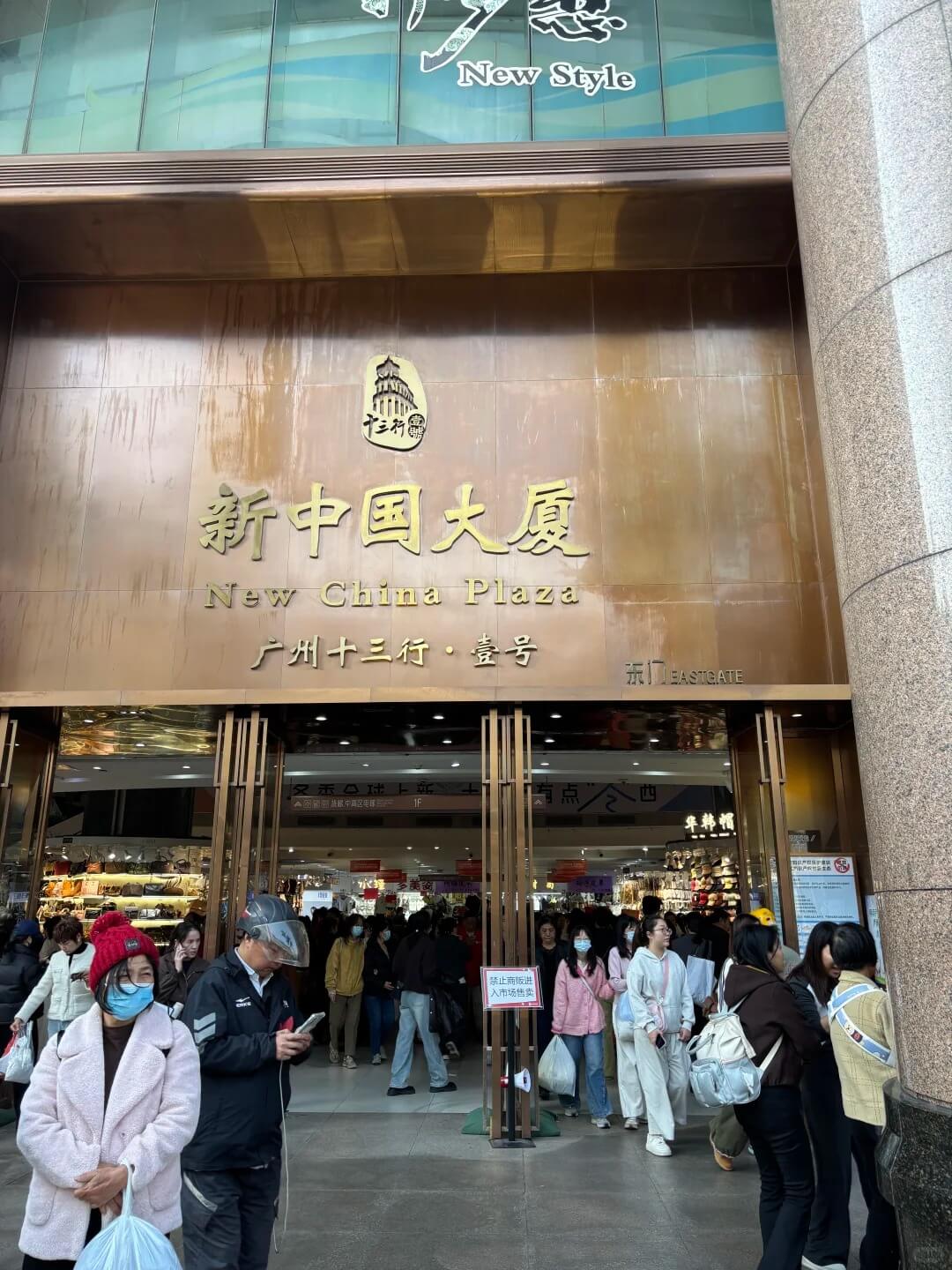
New China Building houses over 2,500 merchants. The speed of product updates is insane—often “New Arrivals Daily.” For buyers who need to keep up with Asian fashion trends, this is a must-visit.
The styles are dominated by Korean Fashion (about 70%), blended with about 20% European styles and other trends. It precisely captures the consumer psychology of young women.
The price range is Mid-to-High. The office floors of the New China Building offer higher quality goods, while the lower stalls and the nearby “Hongbiantian” market offer more cost-effective choices.
Shisanhang’s biggest advantage lies in Spring, Summer, and Autumn fashion. From dresses and blazers to blouses and tops, the variety is exhaustive. Many merchants here possess first-hand sources or own factories, ensuring rapid response times.
03 Railway station market:The High Ground for Originals & Brands
The Railway Station (Liuhua) District, marked by the Baima Clothing Market, represents another face of Guangzhou: High-End, Branded, and Original Design.
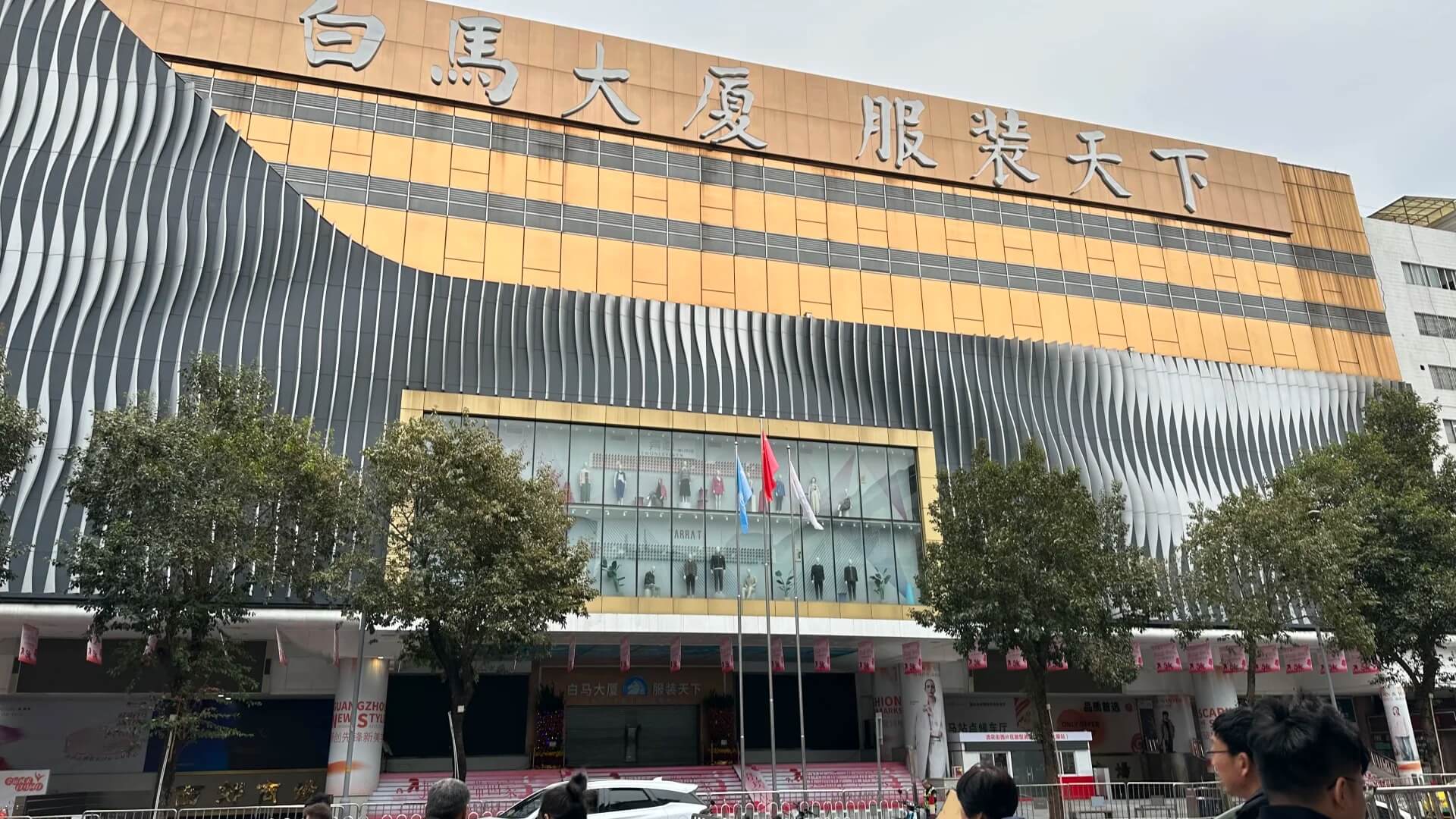
Opened in 1993, Baima has grown into one of the most influential high-end clothing wholesale centers in China.
70%-80% of the products here are Original Designs. The market is hailed as a “Incubator for Chinese Clothing Brands.”
Distinct from Shahe and Shisanhang, Baima’s atmosphere feels like a modern shopping mall. It features central air conditioning, smart systems, and even a Fashion Show Square.
Besides Baima, other malls in this district like apM (formerly UUS) also feature Korean/Chinese Original Designs and boutique collections. The environment is comfortable, perfect for selecting curated items in small batches.
04 Decision Guide
Faced with these three choices, how should you decide? The key is to clearly match your Business Stage, Positioning, and Needs.
Table: Comparison of Guangzhou’s Top 3 Clothing Districts
| Dimension | Shahe District | Shisanhang District | Railway Station (Baima) |
| Core Positioning | Source for Online Sellers, High Volume | Hub for Viral Fast Fashion | High-End Originals & Branding |
| Price Range | Very Low (Cost-Performance First) | Mid-Range (High Value) | Mid-to-High (Premium Design) |
| Main Style | Mass Market, Basics | Korean-led Fast Fashion | Original Design, Business, Chic |
| Sourcing Pace | Very Fast (Early Morning) | Fast (Daily Updates) | Relaxed (Focus on Negotiation) |
| Best For | E-commerce Startups, Volume Sellers | Fashion Boutiques, Fast Turnover | Buyer Stores valuing Uniqueness |
If you are a startup or e-commerce seller with a limited budget needing to test the market, Shahe is the lowest-risk starting point. You can access a wide variety of styles with minimal cost.
If your shop targets young, fashionable women and requires fast-turnover trendy styles, then Shisanhang is your main battlefield. The goods here define the trends for many domestic markets.
If your boutique or buyer store is positioned as Mid-to-High End, where customers value quality, design, and uniqueness, then the Railway Station (Baima) District offers the richest selection. Many suppliers here support small-batch customization, perfect for building exclusivity.
05 Preparation for Success
Before diving into the market, preparation is key.
Define your Sourcing List & Budget. Based on your shop’s positioning, plan the categories, styles, and price ranges in advance to avoid being overwhelmed by the massive amount of information.
Prepare Communication Tools. While many stall owners speak basic English, having a Translation App is crucial. More importantly, proactively ask for and add the supplier’s WeChat.
WeChat is the most direct tool used by Chinese suppliers. Through WeChat, you can view their new product albums, get quotes, and place reorders. It is the key to building long-term relationships.
Manage Your Time. Go to Shahe early; tackle Shisanhang in the busy morning; visit Baima later as their hours are more regular. If time is tight, focus on the one district that matches your needs best.
Field visits are important, but for those in the US or Europe, filtering suppliers can start online. Our website, GZWM, systematically lists premium stalls from these districts.
You can filter by district, category, and style to understand market prices, or even get the WeChat Contacts of stalls directly through us. This allows for remote inquiries and viewing, drastically improving the efficiency of your future sourcing trips.
As a Middle Eastern buyer signs a contract for an original designer brand at Baima Market, trucks loaded with parcels are leaving Shahe for e-commerce warehouses across the country. Meanwhile, at Shisanhang, the latest batch of trench coats—inspired by Seoul runways—has just been hung in the most prominent spot of a stall.
These three districts run in parallel, together forming the complete map of Guangzhou’s clothing trade ecosystem. Your choice determines the face your shop presents to the world.

Comments0