

Table of Contents
- The Short Answer
- 1986–2013: The Golden Age of Wholesale
- 2012–2019: The Wild West Years
- 2019–2022: The Fall of N Factory, the Rise of Clean
- 2022–2024: Big Factories Everywhere
- What Twenty Years Teach
- Frequently Asked Questions
Few trading districts anywhere have lived as many lives as Guangzhou’s Zhanxi Road. In twenty years it rose from a row of general-merchandise stalls into the busiest watch wholesale hub in the world, then reinvented itself as the center of the global replica watch industry — and is now transforming again. This is the complete history: how each era began, who defined it, and why it ended.
The Short Answer
Zhanxi’s watch trade began in 1986, peaked as a legitimate wholesale district around 1999–2010 with seven markets and roughly 1,400 stalls, collapsed under e-commerce pressure after 2010, and saw its replica watch industry professionalize through three waves: the small-workshop era (2012–2014), the benchmark factory era (2014–2022) defined by N, VS and ZF, and the arms-race era (2022–2024) of integrated movements, upgraded dials and weight-matched gold builds — before tightening regulation pushed the trade underground once more.
1986–2013: The Golden Age of Wholesale
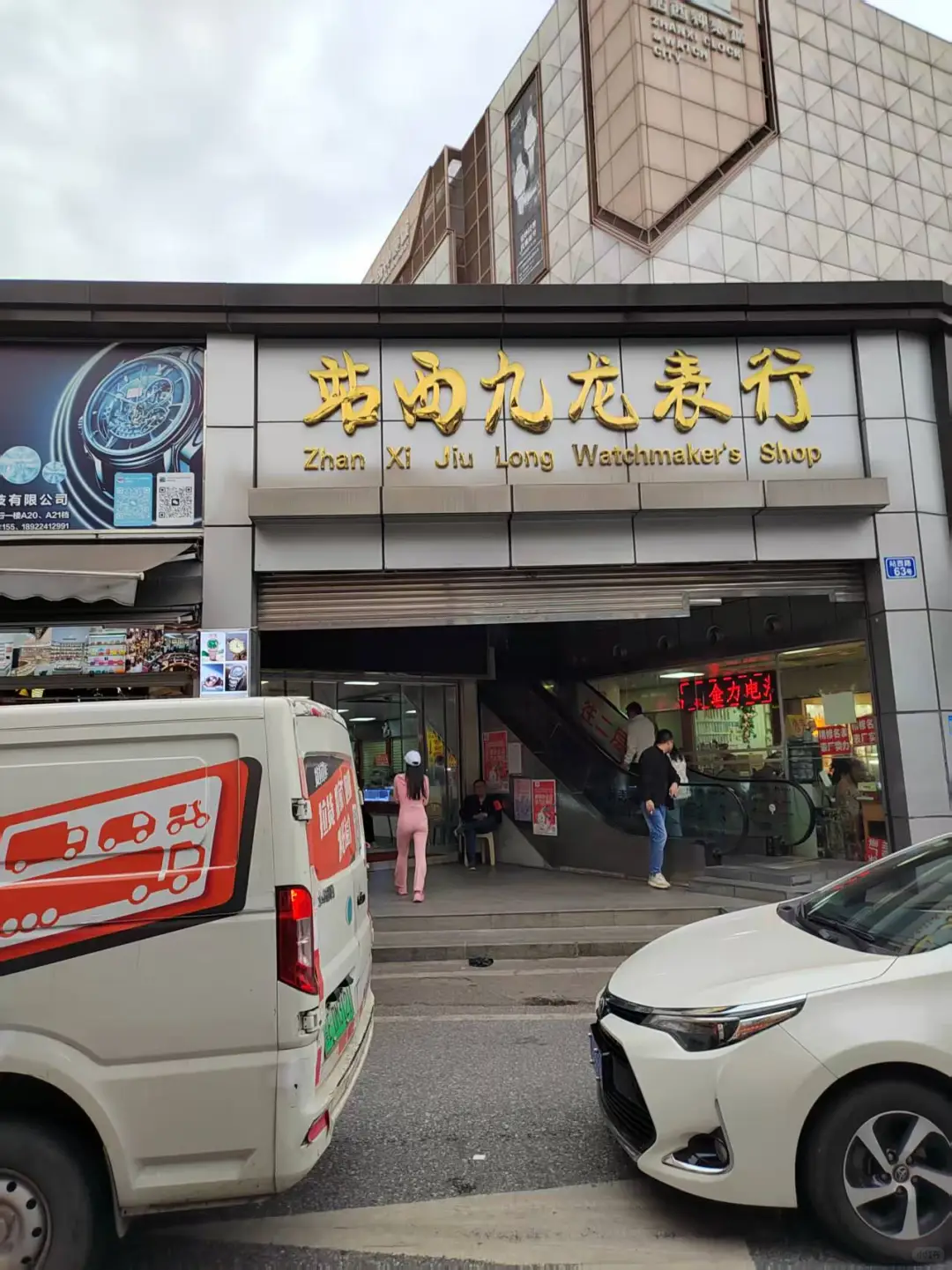
The story begins with no watches at all. In 1986, Zhanxi Road hosted a small-commodity market, and watch sales were a non-specialized afterthought. The trade took shape at the end of the 1980s, when the Jiulong watch firm became the first to deal exclusively in finished watches, and New Oriental Watch City soon brought parts manufacturers into the building. The resulting “finished watches + parts” model made Zhanxi a complete ecosystem: wholesalers attracted retailers, and parts suppliers attracted repairers and assemblers, reinforcing each other for two decades.
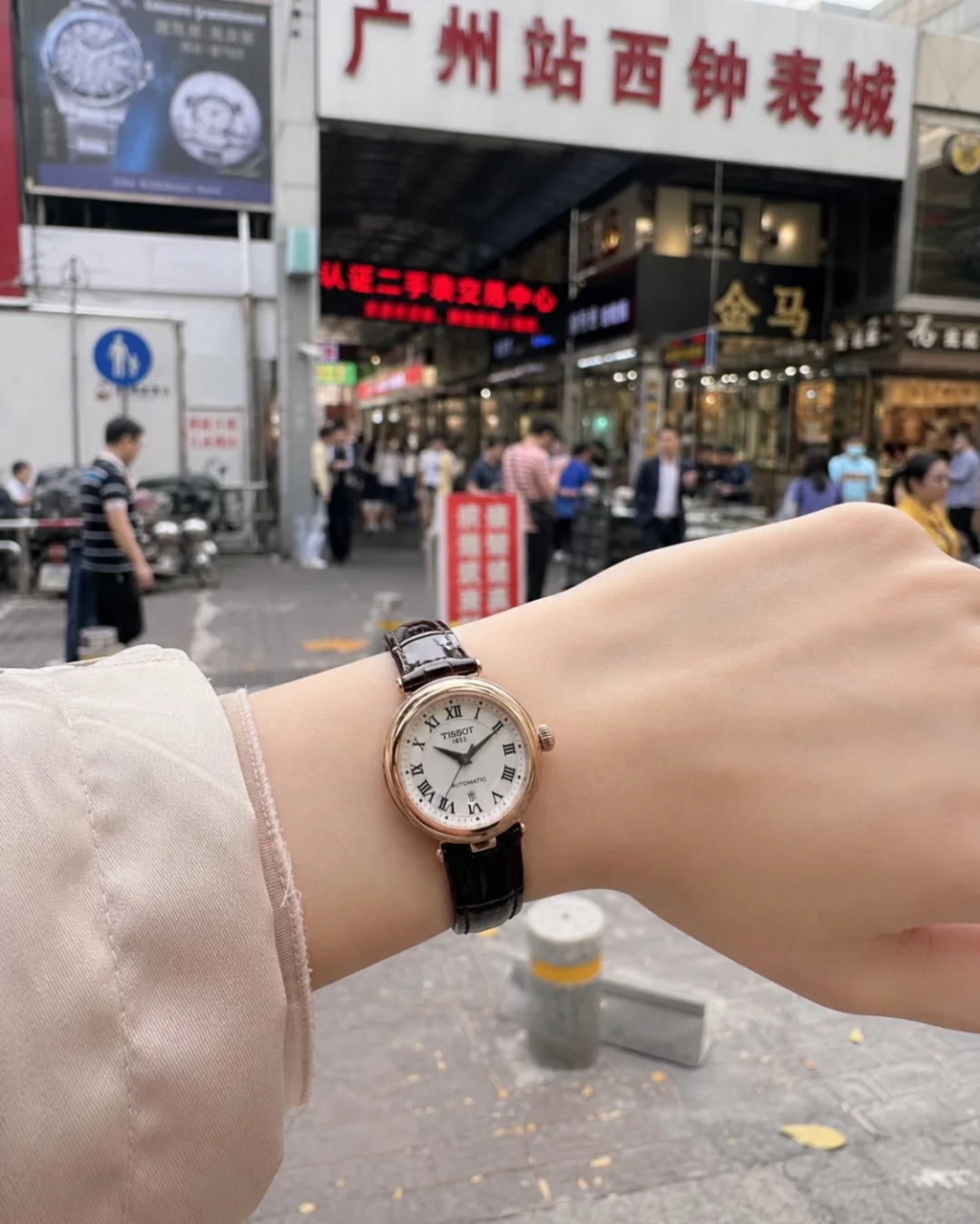
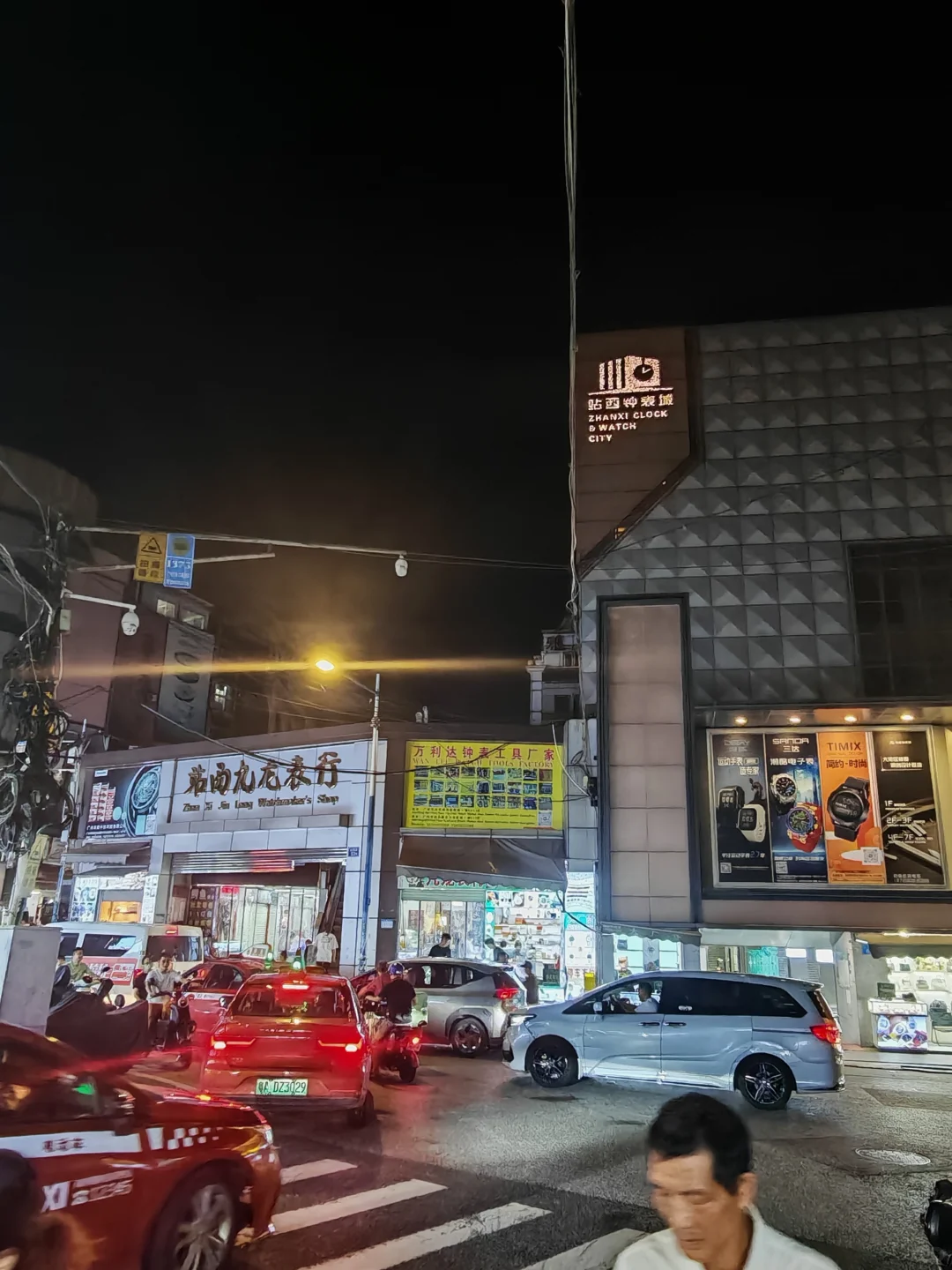
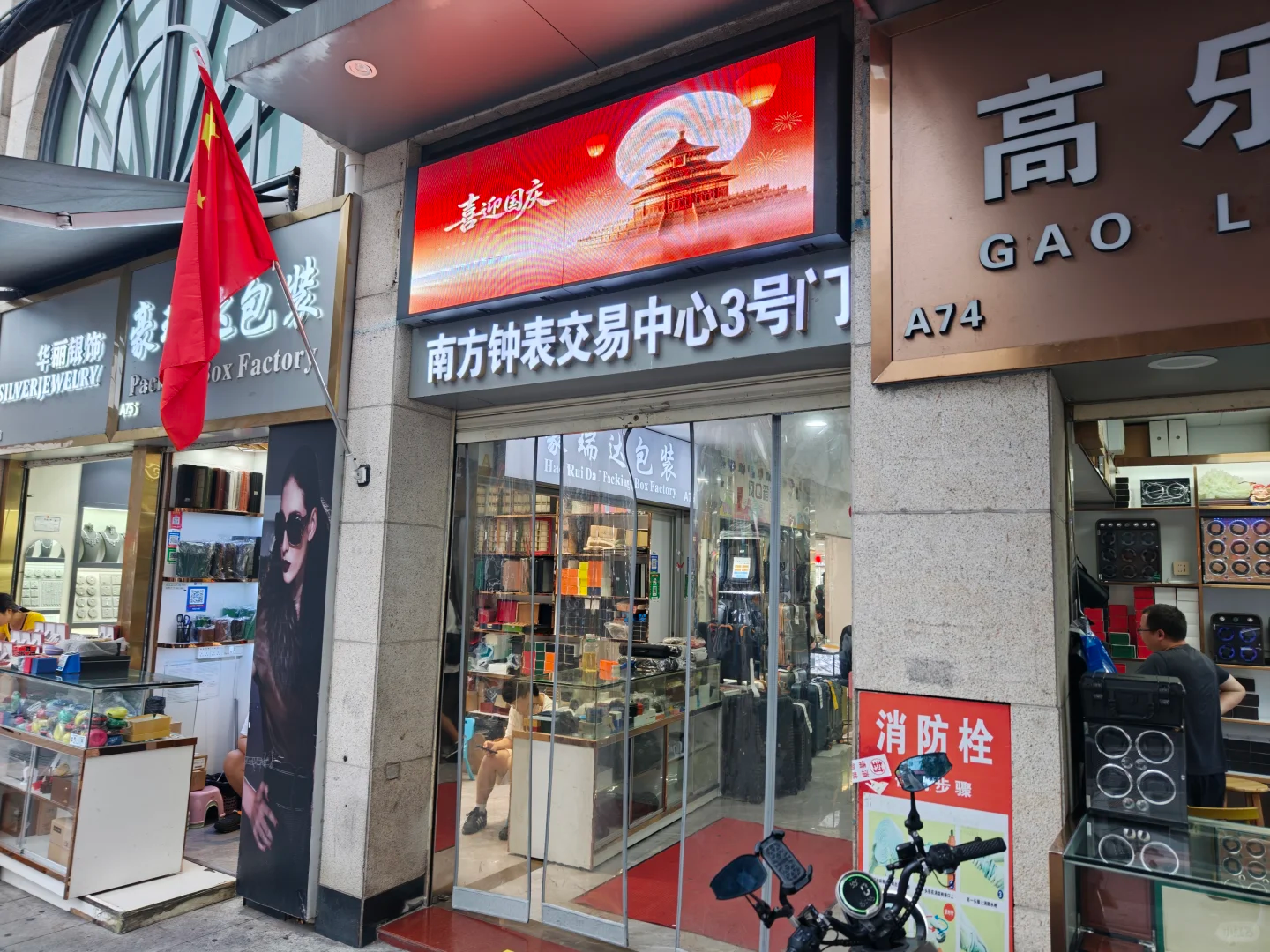
The district’s formal coming-of-age arrived in 1999, when Zhanxi Watch City opened as the trade’s first modern market, fitted with escalators and around 200 shops drawing merchants from across the world. At its peak, the district concentrated seven watch markets — Jiulong, Nanfang, Yazhi, Zhanxi Watch City itself, Tianhao, Wangjiao, and New Oriental — covering nearly 15,000 square meters with close to 1,400 shops and counter stalls, serving buyers from dozens of countries. Older Guangzhou residents remember the crowds and the universal advice: hold your wallet tight.
The turning point came after 2010. As e-commerce absorbed the retail and small-wholesale demand that had fed the district, Zhanxi’s foot traffic thinned and stalls emptied. One veteran stall owner’s numbers tell the story: in his best month of 2013 he sold more than 100,000 watches; a few years later the same stall moved a few thousand a month at most. The open wholesale market had lost over 90% of its volume — but the district’s molds, parts suppliers, and skilled assembly labor did not disappear. They changed employers.
2012–2019: The Wild West Years
Around 2012, the replica trade that would make Zhanxi world-famous was still primitive. None of the now-standardized “letter factories” existed; the market consisted entirely of private small workshops that tooled their own molds, assembled their own watches, and shipped their own orders, with no shared standards. Product matched method: a few hundred RMB bought a watch whose finishing fell apart under close inspection.
The shift arrived around 2014. A growing community of enthusiasts began judging watches on finish quality, fidelity, and movement stability rather than price, and the first benchmark factories emerged: N, ZF, and KW. It was the industry’s first quality revolution, permanently splitting the market into budget volume makers and craftsmanship competitors.
N factory had the most remarkable arc. In 2009 it was a small workshop in the Zhanxi watch building, surviving partly by selling watches with Seagull movements presented as Swiss to visitors who could not tell the difference. Export demand transformed it: as overseas buyers discovered the scene, N built channels into Europe and America and a reputation on foreign “Guangzhou watch” forums. Its defining achievement was the 4130 Daytona movement, developed at serious cost with the Dandong movement factory — engineered component by component against the original rather than adapted from the 7750, which achieves thickness by deleting parts. An exclusivity agreement gave N sole use. The resulting Daytona matched the genuine watch’s thickness and ran stably, and the 4130 made N the industry’s reference point — in veterans’ words, it “carried half the early high-end Guangzhou watch market on its back.”
VS factory chose the opposite doctrine: own the movement, own the market. Concentrating on Omega-style models, it invested in self-developed integrated movements whose balance direction and winding feel closely matched the originals — first in Seamaster 300m and 600m lines, then Constellation. VS held a first-tier position for years, and its integrated-movement strategy became the template others followed.
ZF factory competed on catalog breadth across Portuguese-style, AP, and RM references — earning the teasing nickname “monkey factory” for a release rhythm that alternately delighted and infuriated buyers. By the late 2010s the hierarchy was set: N as leader, ZF and VS as the first tier, and a long tail of small workshops behind them.
2019–2022: The Fall of N Factory, the Rise of Clean
Every informal industry eventually crosses an invisible line. For Zhanxi, the trigger was N factory’s own success: the 4130-powered Daytonas were good enough to compete with the genuine article, and the brand behind the original committed to acting. The consequences were devastating. Effectively all of N factory’s principals were arrested; the Dandong movement factory was warned that continued production would mean closure; and the 4130 supply was cut off entirely. N’s production lines were dismantled within a short period.
The aftermath left two permanent lessons. Existing customers received no after-sales support of any kind. And because the N name retained enormous value, most “N factory” watches circulating afterward were leftover stock or small-workshop relabels — fakes of a fake, often to lower standards than the originals. In this trade, a factory’s reputation can outlive the factory itself.
Into the vacuum stepped Clean factory — “C” in market shorthand. C was no overnight success: it had spent its early years as a component supplier, manufacturing ceramic bezels for other factories’ Submariner-style models, before launching complete watches under its own name. That background proved decisive. C inherited access to the Dandong 4130 supply chain and moved quickly across Daytona, Submariner, and GMT references, becoming the most comprehensive single source on that side of the market. With one dominant name gone and another proving scale was achievable, the industry entered its explosive expansion phase — what veterans call the era of “big factories blooming everywhere.”
2022–2024: Big Factories Everywhere
The final era began with a new three-legged structure: VS factory holding the Omega and Panerai side, ZF defending AP and Vacheron-style territory, and C deepening its grip on Submariner and Daytona references. Competition now ran between equals — and the battlefield was technology.
The decisive dividing line was the mainstream adoption of integrated movements. VS led with Dandong-built integrated calibers in its Seamaster 150 and 300 lines; C followed with integrated 4130 and 3285 movements; ZF’s AP 3120 caliber matured in parallel. Shock-absorber position, balance direction, and bridge finishing all converged on the originals. Guangzhou’s replica watches crossed from “correct on the outside” to “correct inside and out” — and the rest of the industry had to follow or fall behind.
2023 was peak competition. Essentially every hot reference had two or three major factories building it: the Royal Oak 26240 saw APS, DDF, and ZF battle head-to-head; the Nautilus was divided among 3K, PPF, and BT; the Rolex catalog split among C, BT, EW, and others. Version cycles compressed from one revision a year to one a quarter — V2, V3, V4 in rapid succession as factories one-upped each other’s fixes.
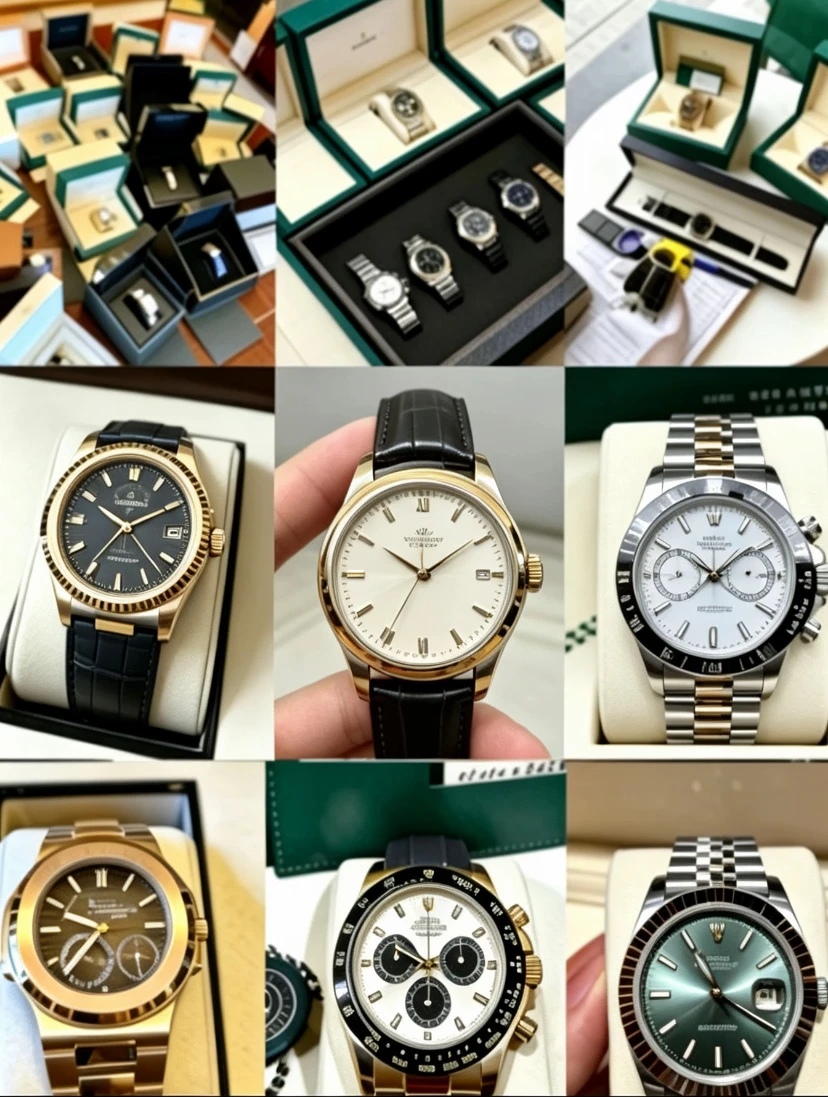
The arms race spilled into components. Premium aftermarket dials — SW and DP — became the default expectation among serious players, with factories beginning to specify them at the production line (DDF’s Nautilus Aquanaut, for instance, shipped with SW black dials and hands), while the player culture of dial swapping pushed total build costs higher. The last frontier was physical presence: weight-matched builds became mainstream — DDF’s 26240 weight version hit 194.8 grams, about 25 grams over the standard build, with full rose-gold steel-bracelet versions rated above 200 grams — joined by 18K wrapped-gold and solid-gold custom orders. Newer Dandong calibers (4401, 4131) brought flyback chronograph and bi-directional winding into the copy repertoire.
Veterans describe 2022–2024 as both the summit and the pivot: craftsmanship reached its peak while regulation tightened and the old street-facing order dissolved, pushing the trade toward new, lower-visibility business models.
What Twenty Years Teach
Three principles emerge from the full arc. First, in Guangzhou, every trade eventually professionalizes — the same district that hosted chaotic small workshops produced component-level engineering within a decade. Second, capability migrates rather than disappears: the molds and skills that built the wholesale golden age powered the replica era, and they will power whatever comes next. Third, the name on the product guarantees nothing — factories rise, are shut down, and are imitated, and only supply-chain knowledge, not brand mythology, protects a buyer.
This article documents the history of Guangzhou’s watch trade, including its unauthorized replica industry, for market observers. Replica watches infringe trademarks, and buying or importing them carries serious legal and customs risk in most jurisdictions. Nothing here is buying advice.
Frequently Asked Questions
When did Zhanxi Watch City open, and how big was it at its peak?
The Zhanxi Watch City building opened in 1999 as the trade’s first modern facility. At the district’s peak, seven watch markets covered nearly 15,000 square meters with around 1,400 shops and counter stalls serving buyers from dozens of countries.
Why did the Zhanxi wholesale market decline?
The rise of e-commerce after 2010 pulled retail and small-wholesale demand away from physical markets. Stall owners reported monthly sales falling from over 100,000 pieces at the 2013 peak to a few thousand within a few years.
What was N factory, and what happened to it?
N factory was the first benchmark of Guangzhou’s replica watch era, famous for its 4130 Daytona movement co-developed exclusively with the Dandong movement factory. Following brand-driven enforcement around 2019–2021, its principals were reportedly arrested, its movement supply was cut, and its production lines were dismantled. Watches sold as “N factory” since then are mostly leftover stock or relabels.

What made Clean factory the successor?
C had years of experience as a component supplier — ceramic bezels for other factories — then inherited access to the Dandong 4130 supply chain and built the most comprehensive Rolex-style catalog in the market, covering Daytona, Submariner, and GMT references.
What changed in Guangzhou’s replica watch industry between 2022 and 2024?
Integrated movements became standard (correct balance direction, shock position, and bridge finishing), version cycles compressed from yearly to quarterly, premium aftermarket dials (SW, DP) entered factory configurations, and weight-matched builds with wrapped gold pushed physical fidelity to its peak — even as tightening regulation pushed the trade toward lower-visibility models.
Are “letter factory” watches still sold today?
The names persist in the market, but production is fragmented and much of what carries a famous factory name is not from the original operation. For buyers, the deeper point is legal: these are unauthorized replicas, and importing them carries customs and legal risk in most countries.
Related Reading
- High-End Fashion Sourcing Guide
- Guangzhou Wholesale Market Directory
- Explore More Guangzhou Market Guides
Related Wholesale Market Directory Links
Use these directory pages to move from sourcing research to actual vendor shortlisting.

Comments0